
BBQ and Food Culture in Transition
greensight talksBBQ

21.08.2026
2 min
by Leif Hallerbach
Barbecuing has become a year-round lifestyle trend. As a result, consumer expectations are changing. We speak with Thomas Tornatzky from MEAT IN magazine about international trends in barbecuing and food culture.
A new culinary awareness
Dear Thomas Tornatzky, your magazine MEAT IN regularly features culinary traditions from other countries. How do you view international market trends in the realm of high-quality food culture?
Internationally, we’re seeing an interesting counter-trend to anonymous mass consumption. On the one hand, consumers are under economic pressure and are shopping with greater price sensitivity. On the other hand, a significant target group is showing growing interest in traceable origins, artisanal processing, and unique taste experiences. This means that while people may not be eating more meat, they are making more conscious choices. Instead of a large quantity of average-quality meat, many consumers prefer a smaller cut with a clear origin, a specific breed, longer aging, or a compelling story.
So consumer preferences are changing?
Internationally, we’re seeing a renewed appreciation for regional meat cultures. Old breeds of livestock, traditional cuts, and nearly forgotten cooking techniques are being rediscovered. At the same time, they’re being combined with modern culinary influences. Korean BBQ, Japanese yakiniku, South American asado, Mediterranean fire cooking, and American “low-and-slow” barbecue no longer exist in isolation from one another. Skilled chefs and passionate barbecue enthusiasts are drawing on elements from different cultures to develop a highly distinctive, global style of fire cooking.
Consumer expectations
Where do you see further changes?
Another important point is transparency. Terms like “premium,” “regional,” or “sustainable” are no longer enough on their own. Discerning consumers want to know which farm an animal came from, how it was raised and fed, how long the transport routes were, and where the meat was processed. Credibility thus becomes a decisive quality characteristic. This presents a major opportunity for producers, butchers, restaurateurs, and retailers: a high-quality food culture works best when product quality, craftsmanship, and communication align. Attractive packaging can support a compelling story—but it cannot make up for a lack of substance.
Another important point is transparency. Terms like “premium,” “regional,” or “sustainable” are no longer enough on their own. Discerning consumers want to know which farm an animal came from, how it was raised and fed, how long the transport routes were, and where the meat was processed. Credibility thus becomes a decisive quality characteristic. This presents a major opportunity for producers, butchers, restaurateurs, and retailers: a high-quality food culture works best when product quality, craftsmanship, and communication align. Attractive packaging can support a compelling story—but it cannot make up for a lack of substance.
What do conscious consumers expect from the grilling experience today?
Today’s consumers expect much more than just a grill grate and as much heat as possible. The grilling experience should be high-quality, uncomplicated, versatile, and social. It’s no longer just about cooking meat over a heat source. Outdoor cooking has become a distinct form of cooking in its own right. Discerning consumers first and foremost pay attention to the quality of the food. They want to be able to trace its origin and are increasingly willing to buy less meat—but of better quality. At the same time, fish, vegetables, cheese, bread, pizza, and full meals are naturally part of today’s grilling experience. The classic image of just sausages and pork neck steaks on the grill is long outdated.
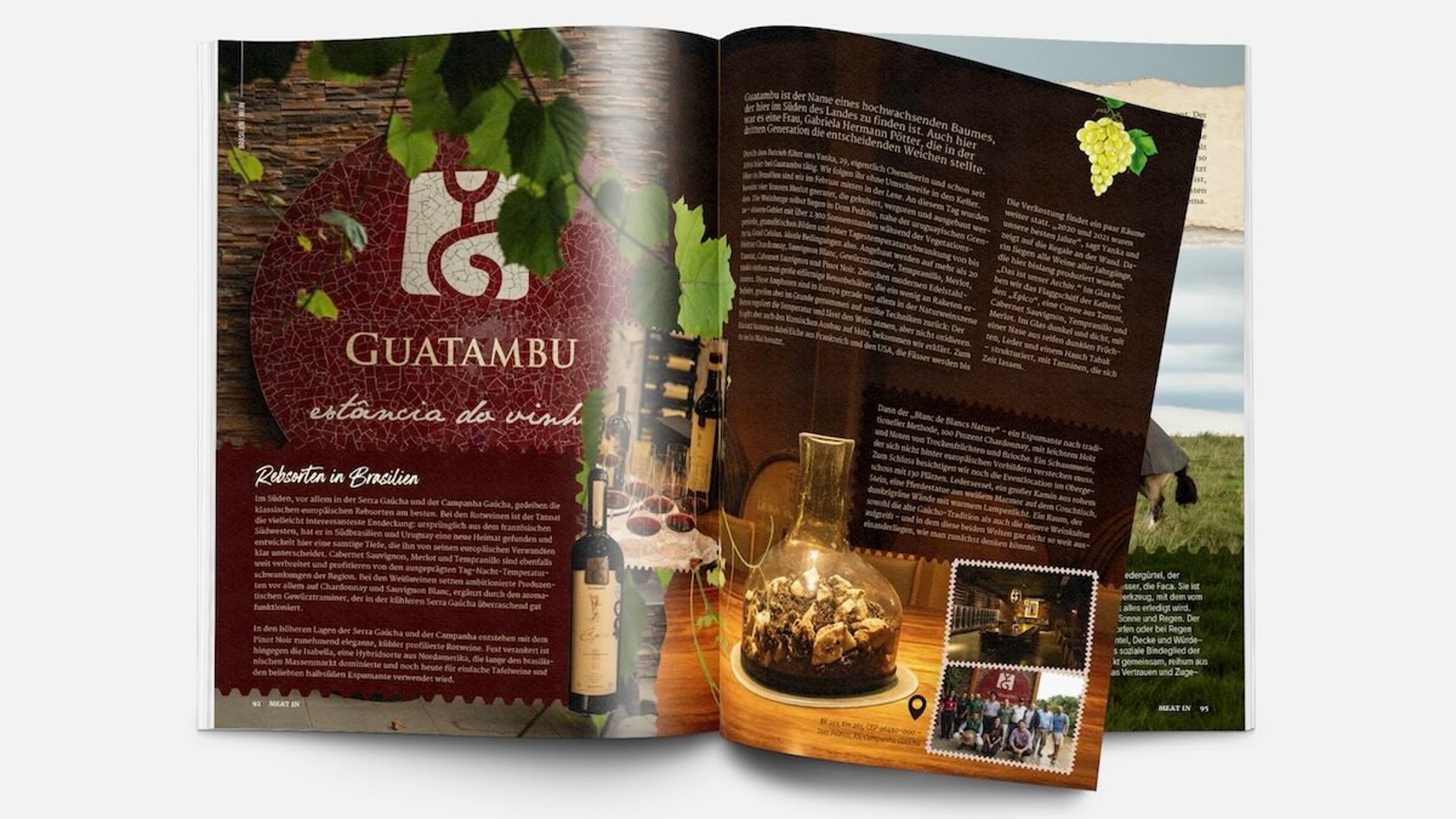
In every issue, MEAT IN magazine explores the culture of high-quality meat. © MEAT IN
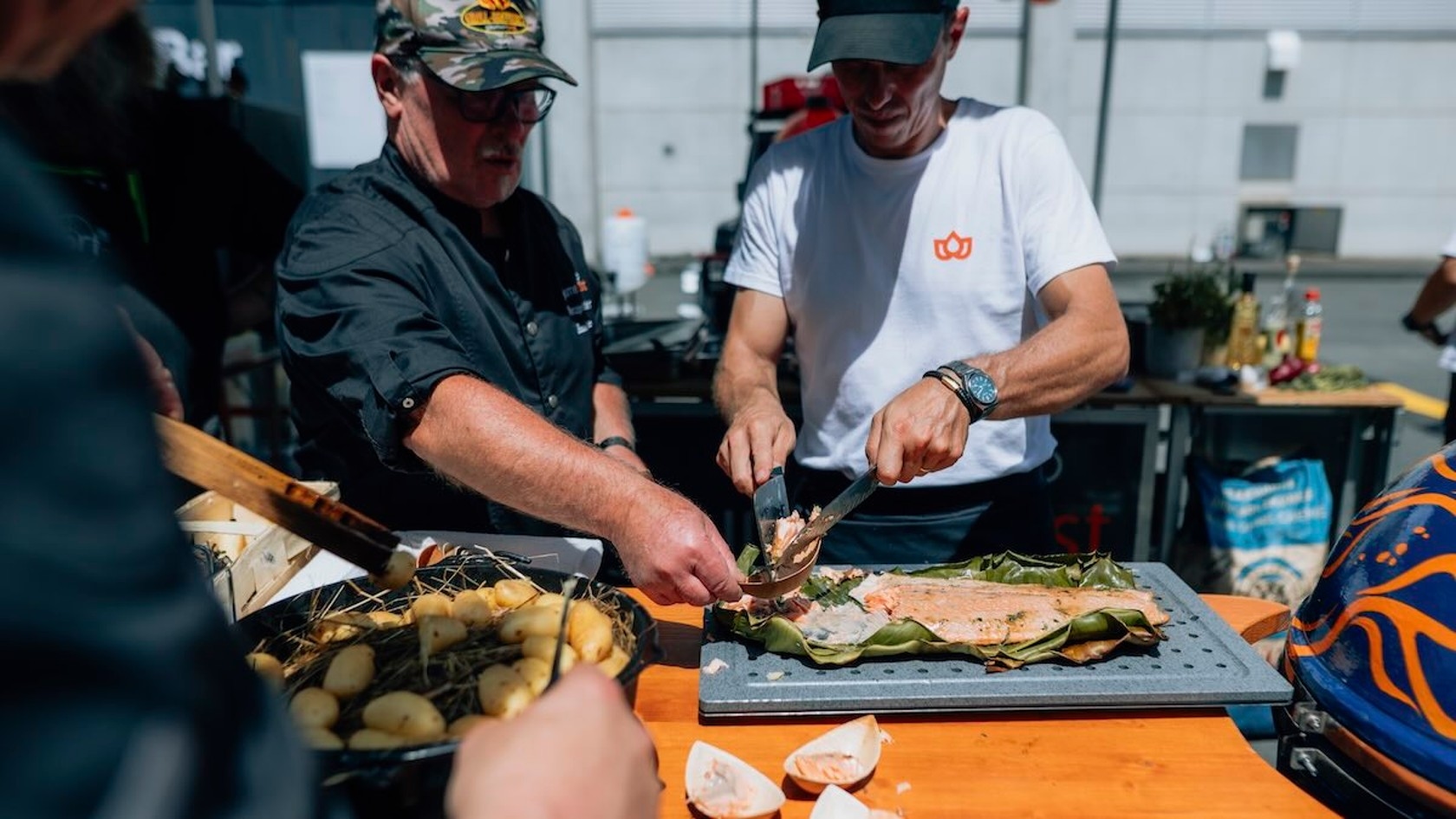
Today, the grilling experience is expected to be high-quality, versatile, and social. © Koelnmesse GmbH
Preparation requirements
What other current needs exist when it comes to the BBQ lifestyle?
Added to this is the desire for control. Anyone who spends money on a good cut of meat wants to cook it precisely. Even heat distribution, easily adjustable temperature zones, and reliable core temperature measurement are therefore becoming increasingly important. Digital sensors and app connectivity can be useful here—but only if they actually simplify the cooking process. Technology should not be an end in itself.
What else is expected of a good grill today?
A grill must be ready to use quickly, intuitive to operate, and easy to clean. Especially in urban areas, compact dimensions and low smoke production are also important. Current market trends accordingly range from compact electric and gas grills to modular outdoor kitchens. The most important factor, however, remains the shared experience. Fire creates a natural focal point. People gather together, prepare food, taste it, discuss it, and take their time. This is precisely where the special power of grilling lies: it combines modern cooking with a very primal social ritual.
Development of new devices
What interesting developments are you seeing in grills and accessories?
I currently find four developments particularly interesting: modularity, more precise temperature control, compact high-performance systems, and the combination of different cooking methods. Modular systems make it possible to gradually customize a grill to personal needs. Additional elements transform a classic grill into a flexible cooking station. This makes more sense than equipping consumers with as many features as possible that they’ll hardly ever use. When it comes to temperature control, charcoal and pellet grills are becoming significantly more user-friendly. Precise airflow, electronic controls, and wireless temperature probes make it easier to both sear food quickly and manage long cooking processes. The challenge lies in leveraging the advantages of modern technology without completely relinquishing the actual art of grilling.
What about compact appliances and accessories?
The compact appliance sector is evolving very rapidly. Small gas and electric grills, portable planchas, high-performance tabletop appliances, and portable pizza ovens deliver astonishing temperatures in limited spaces. This makes sophisticated outdoor cooking possible even on balconies, small patios, or while camping. At the same time, classic systems are experiencing a renaissance, undergoing technical advancements and becoming more versatile. The market is therefore not simply shifting from analog to digital. Rather, different solutions are emerging for different cooking styles. When it comes to accessories, I see a trend toward fewer, but higher-quality products. A reliable thermometer, good knives, sturdy tongs, practical cast-iron or plancha griddles, and professional storage solutions are usually more valuable than a drawer full of short-lived gadgets.
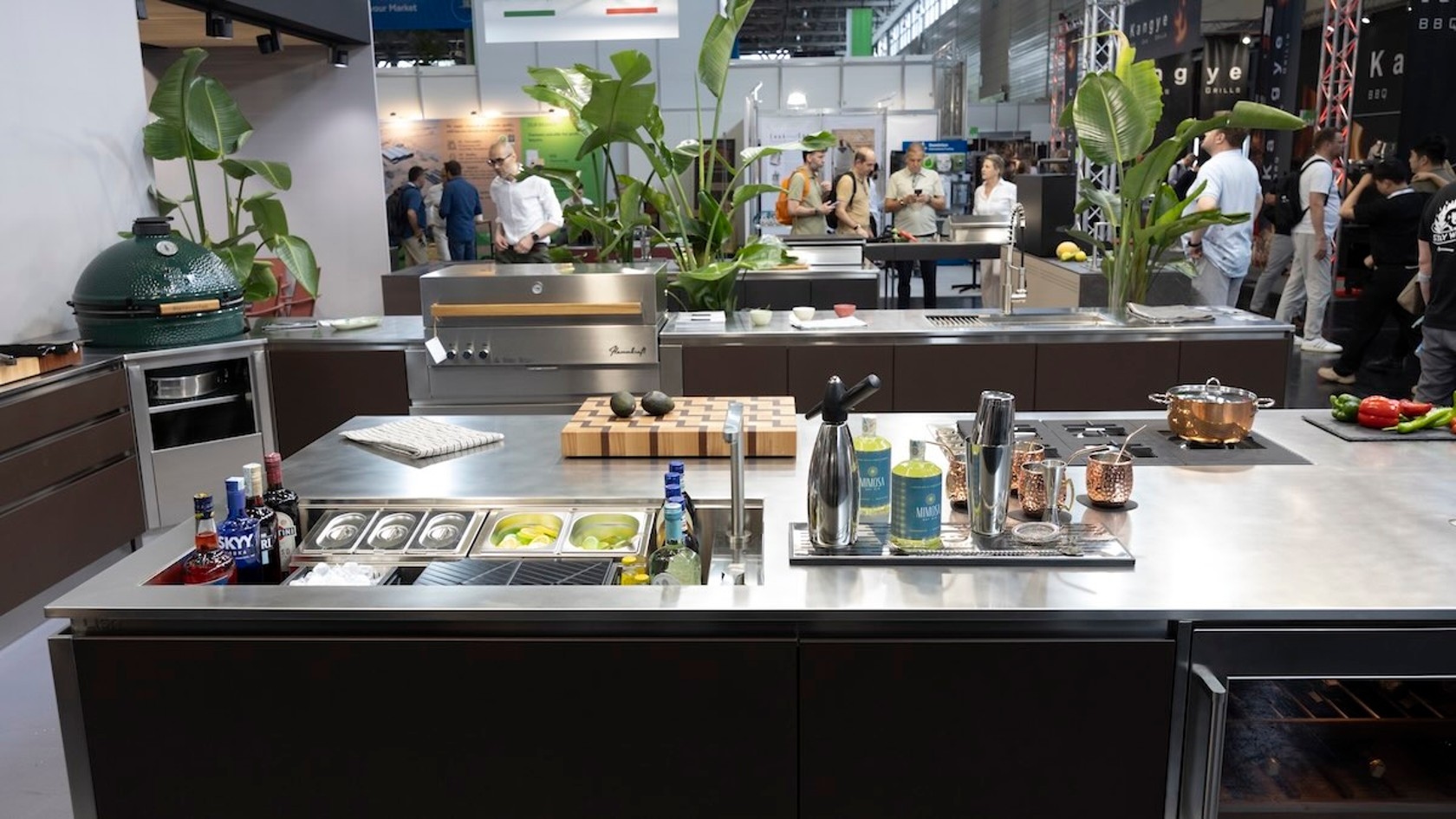
Outdoor cooking has become a distinct form of cooking. © Koelnmesse GmbH
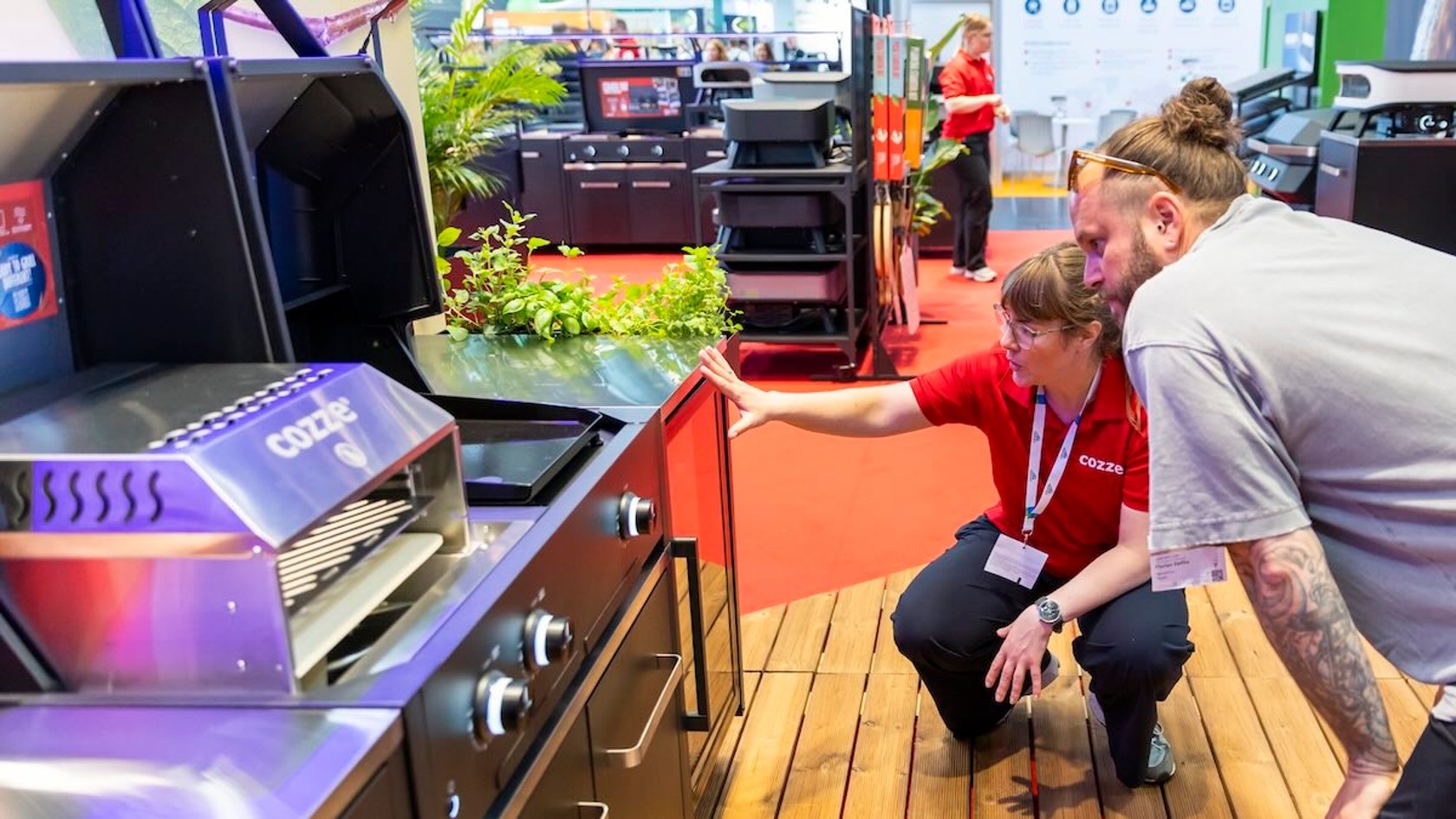
“spoga+gafa serves as a barometer for the BBQ and outdoor cooking industry.” © Koelnmesse GmbH
Novelties at spoga+gafa
What other exciting new products did you discover at the trade show?
For us, spoga+gafa isn’t just a product show—it’s above all an international barometer for the BBQ and outdoor cooking industry. Here, it’s easy to see which ideas have real substance and which are more like short-lived marketing fads. What stood out to me in particular was how strongly grilling is now seen as an integral part of a comprehensive outdoor lifestyle. The lines between the grill, the kitchen, the patio, camping, and leisure are blurring. Outdoor kitchens are becoming more comfortable and modular, while portable units are getting more and more powerful. The spectrum ranges from high-quality built-in units and cooking stations to compact systems that can be converted from a cooking appliance to a grill in just a few simple steps while on the go. I also find the further development of classic fire techniques fascinating. A good example of this blend of tradition and convenience are modern systems that combine the authentic flavour of charcoal with precisely controllable cooking processes. Another highlight was compact pizza ovens and multifunctional appliances. What matters most is that a device not only reaches a spectacular maximum temperature but also distributes that energy evenly and makes it usable in a practical way.
What do you expect in terms of future developments?
In my view, the future doesn’t belong to a single, universal grill, but rather to intelligently designed systems that are tailored to the actual needs of their users. The innovations presented at this year’s spoga+gafa confirm this diversity—ranging from charcoal grills with precise temperature control to compact urban models, modular kitchens, and mobile outdoor cooking systems. My most important insight from the trade show is therefore this: The industry is thinking less and less in terms of individual products and more in terms of usage scenarios. It’s about solutions for the balcony, the large patio, the ambitious outdoor kitchen, or the mobile adventure. Good innovation isn’t recognized by having as many digital features as possible, but by giving the user more control, flexibility, and enjoyment when cooking.
Thomas Tornatzky is the editor-in-chief of MEAT IN (www.meat-in.de (external website)), Germany's leading magazine on meat culture, and the managing director of the NEUE FORMEN agency group in Cologne ( www.neueformen.net (external website)).