
Microgreens: The Trend Toward Mini-Gardening
greensight businessCreation & Care
25.03.2026
2 min
by Leif Hallerbach
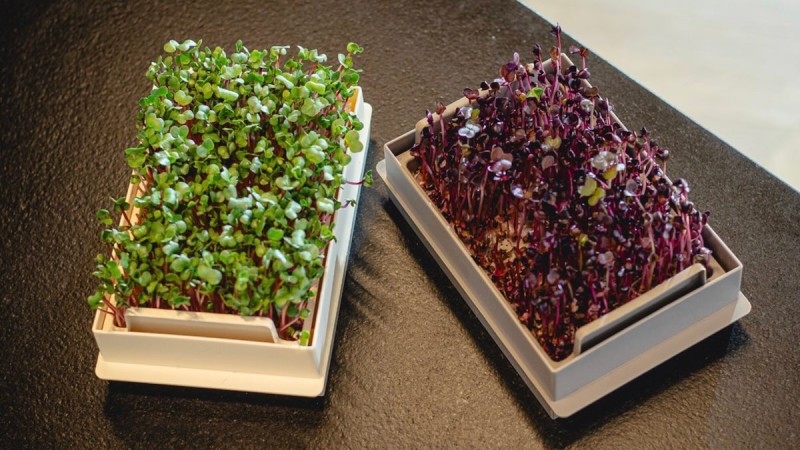
Nutrient-rich small plants for growing in your own kitchen: Microgreens have become a healthy trend in indoor gardening. The growing demand for urban green self-sufficiency offers great potential for the gardening industry.
The joy of growing your own
Even if you don’t have a garden, you don’t have to miss out on healthy home-grown produce. Indoor gardening offers a trendy alternative to growing vegetables and herbs outdoors. Especially in big cities, people are increasingly enjoying growing fresh greens right in their own kitchens. Microgreens—young plants and sprouts packed with nutrients—are becoming increasingly popular. Eaten fresh, they provide a healthy dietary supplement whose aromatic flavour also shines in the kitchen.
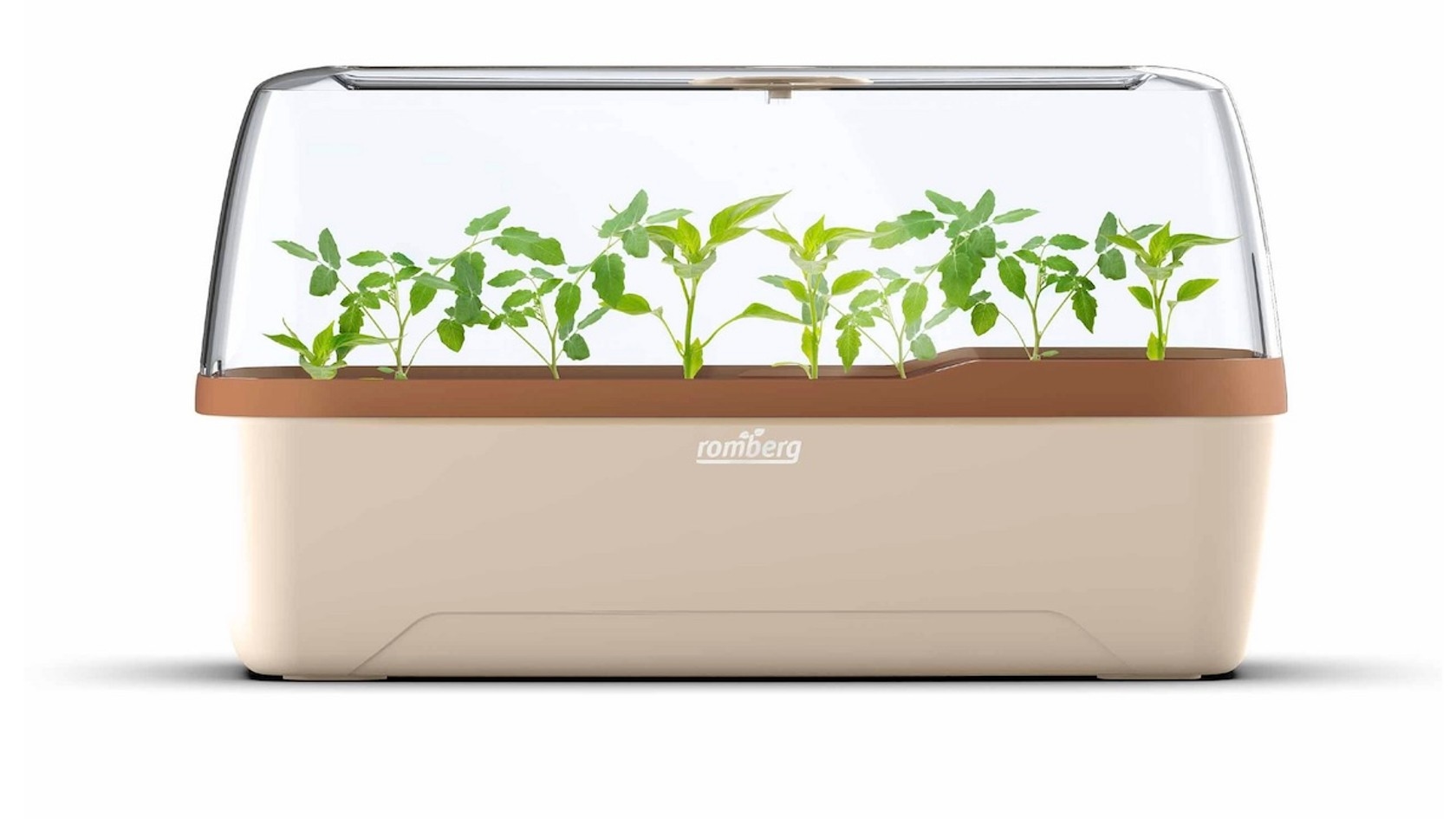
“BoQube L PLUS” mini greenhouse. © Romberg GmbH & Co. KG
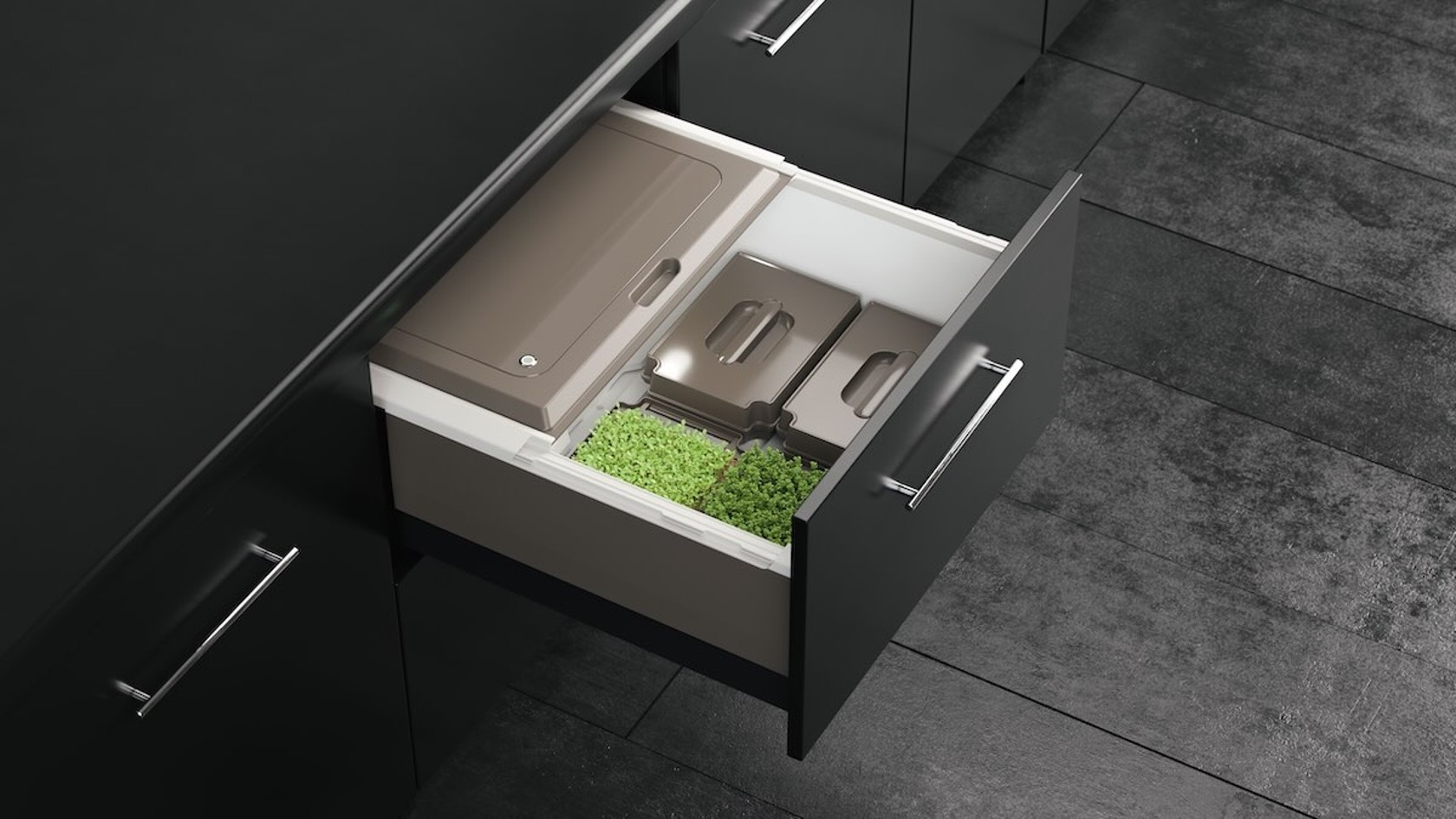
“Micro Garden” for the kitchen drawer. © Hailo-Werk
Superfood in a small format
Microgreens originated as a superfood trend in the United States. Thanks to their high nutrient content and compact size, these tiny plants are particularly well-suited for indoor cultivation. They are especially popular among younger and health-conscious consumers. As a tasty topping for soups, salads, or sandwiches, they have found their way into modern urban kitchens.
Growing kits for home use
Grow boxes, mini greenhouses, and plant racks help microgreens grow and thrive. One advantage: They’re grown using growing media, so no soil is needed. For home use, there are starter kits with organic seeds and small plant racks, whose built-in LED lights ensure optimal conditions. Small grow boxes are also practical, allowing you to fit these delicious greens into a cabinet drawer or place them directly on the kitchen table.
Vertical planting systems
Special growing media, as well as hemp and coconut mats, make it easier to grow broccoli, red cabbage, radishes, or cress on a small scale. Smart apps ensure proper lighting and watering. Vertical planting systems or plant racks promise a bountiful harvest of microgreens. They not only save space but can also be expanded with modular components. This also makes it easy to combine microgreens with other plants.
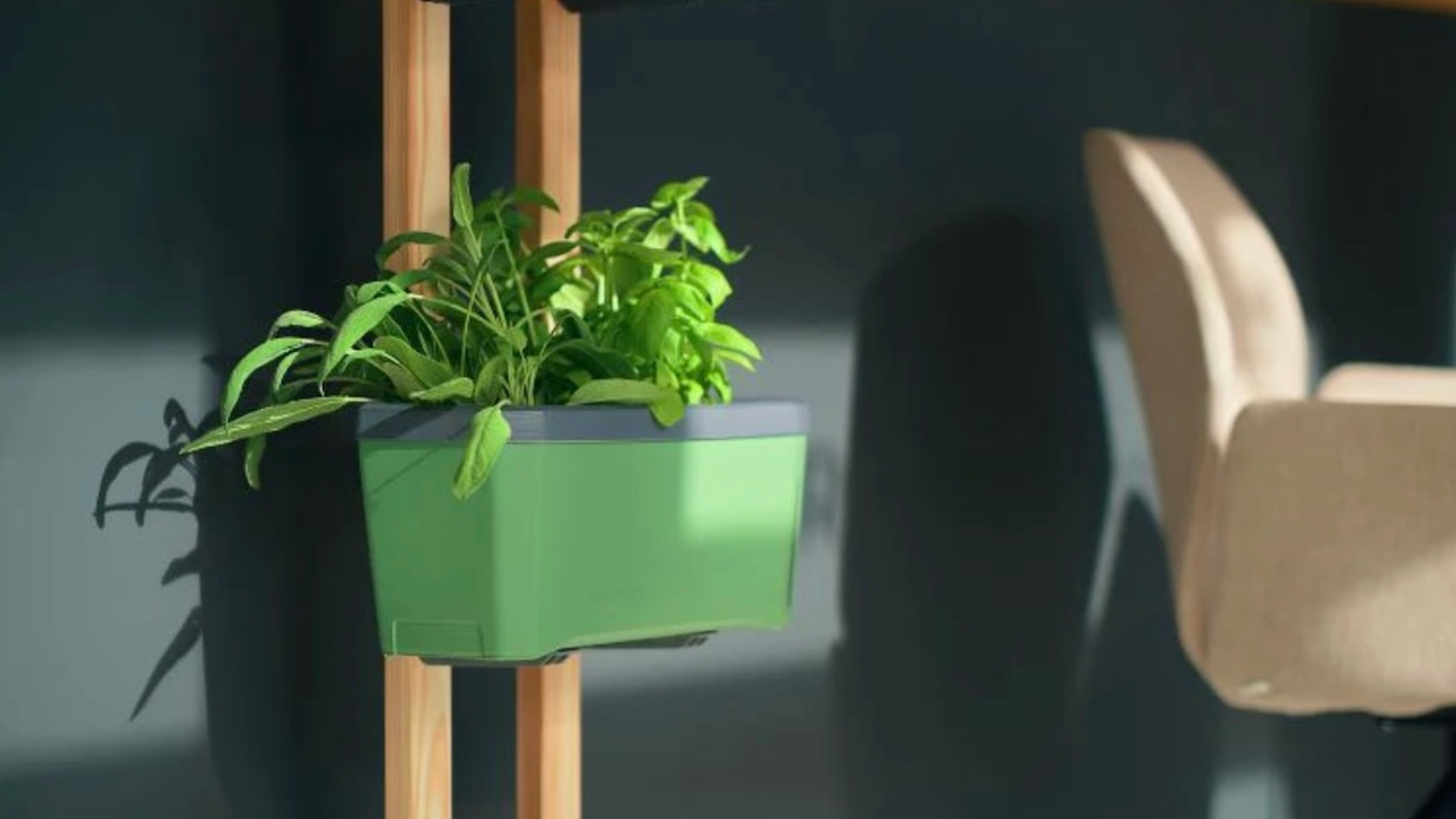
Vertical garden “Harry Herbs” with planter. © Gusta Garden GmbH
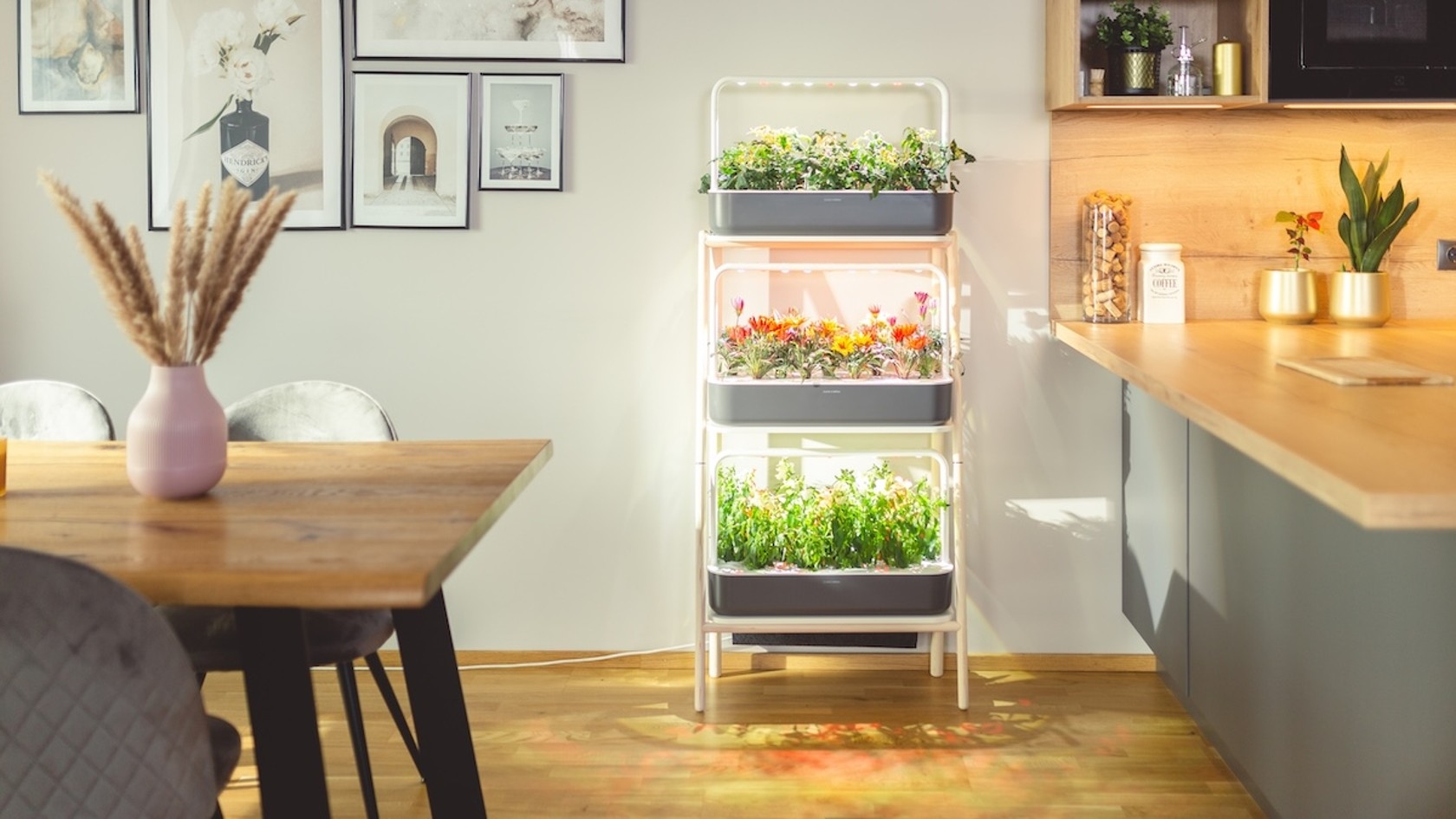
Plant shelf “Smart Garden” with LED. © CLICK & GROW LLC
Urban agriculture
Because microgreens are small and have a short growth cycle, growing them on a larger scale is cost-effective. As a result, plant racks are now also marketed as scalable systems for urban agriculture. The large-scale cultivation of these small plants takes place in complete vertical farming racks equipped with self-watering systems and smart lighting. Sensors and climate control also contribute to the plants’ healthy growth. This ensures that retailers and restaurants always have access to fresh sprouts grown in-house with short supply chains.
More than just a lifestyle
Experts see indoor gardening with microgreens as more than just a lifestyle trend. By 2050, nearly seven out of ten people worldwide will live in urban areas. There is therefore a growing need for a supply of healthy food in cities. In addition, microgreens cater to the growing interest in a healthy lifestyle and vegetarian or vegan diets. Thus, microgreens could be a sustainable food supplement for the future.